Three layers sit behind one MCP connection: a structural index of your repository, a durable memory of what your team decided, and — for enterprises — a governed pipeline that routes the right model to each step of delivery.
Tree-sitter parses 12 languages into a typed graph, then Helixor compiles structure on top of it. The agent asks a question and receives typed answers — definitions, usages, bonds — instead of a stack of files to re-read.
Every symbol, where it lives, and everywhere it is touched.
How execution and values actually move through the repo.
Coupling strength between symbols, so blast radius is rankable.
Positive and negative patterns scored against your architecture rules.
Git diffs are spliced into the index as they land, so the agent knows its knowledge is stale before it answers instead of confidently guessing.
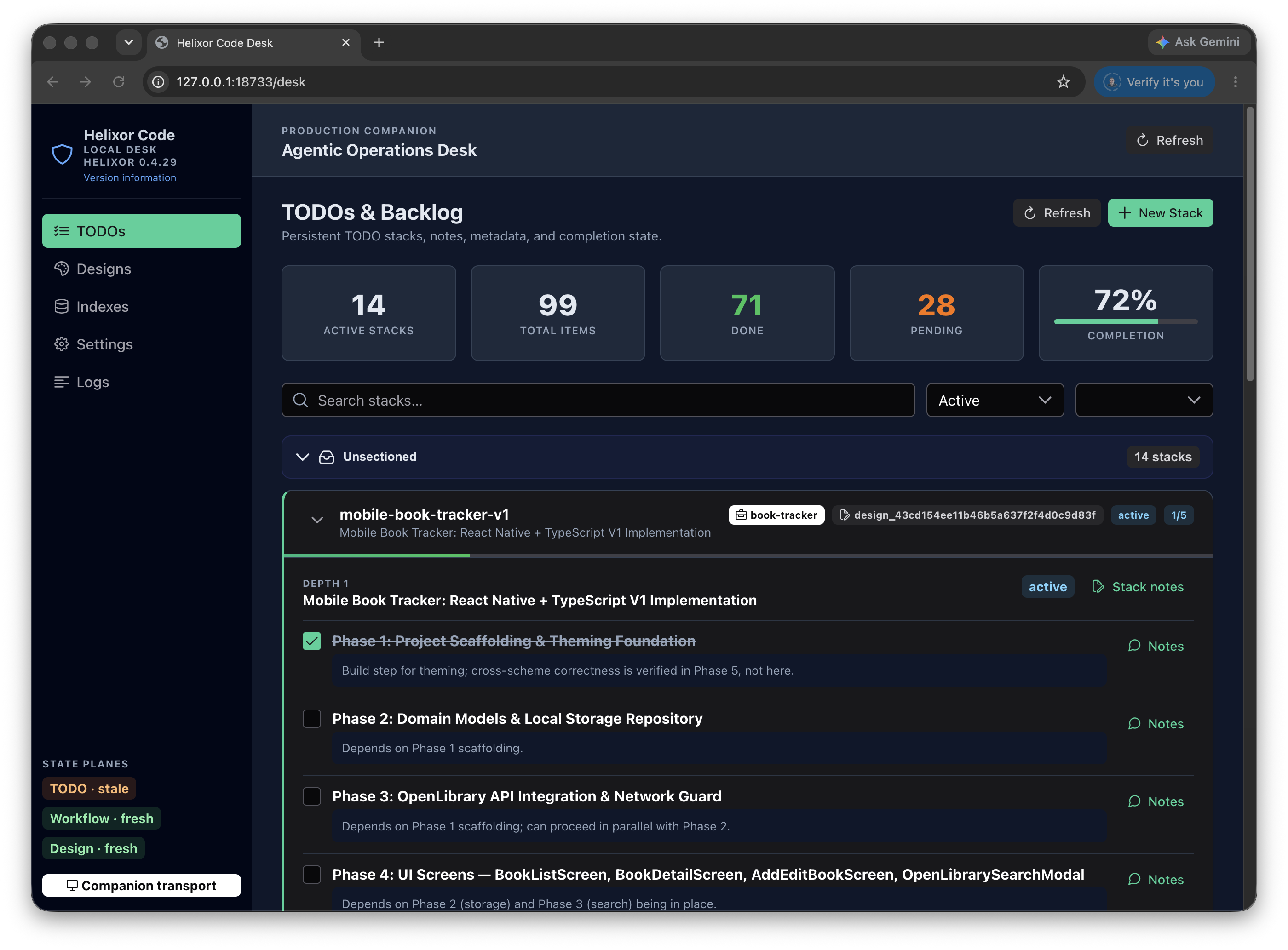
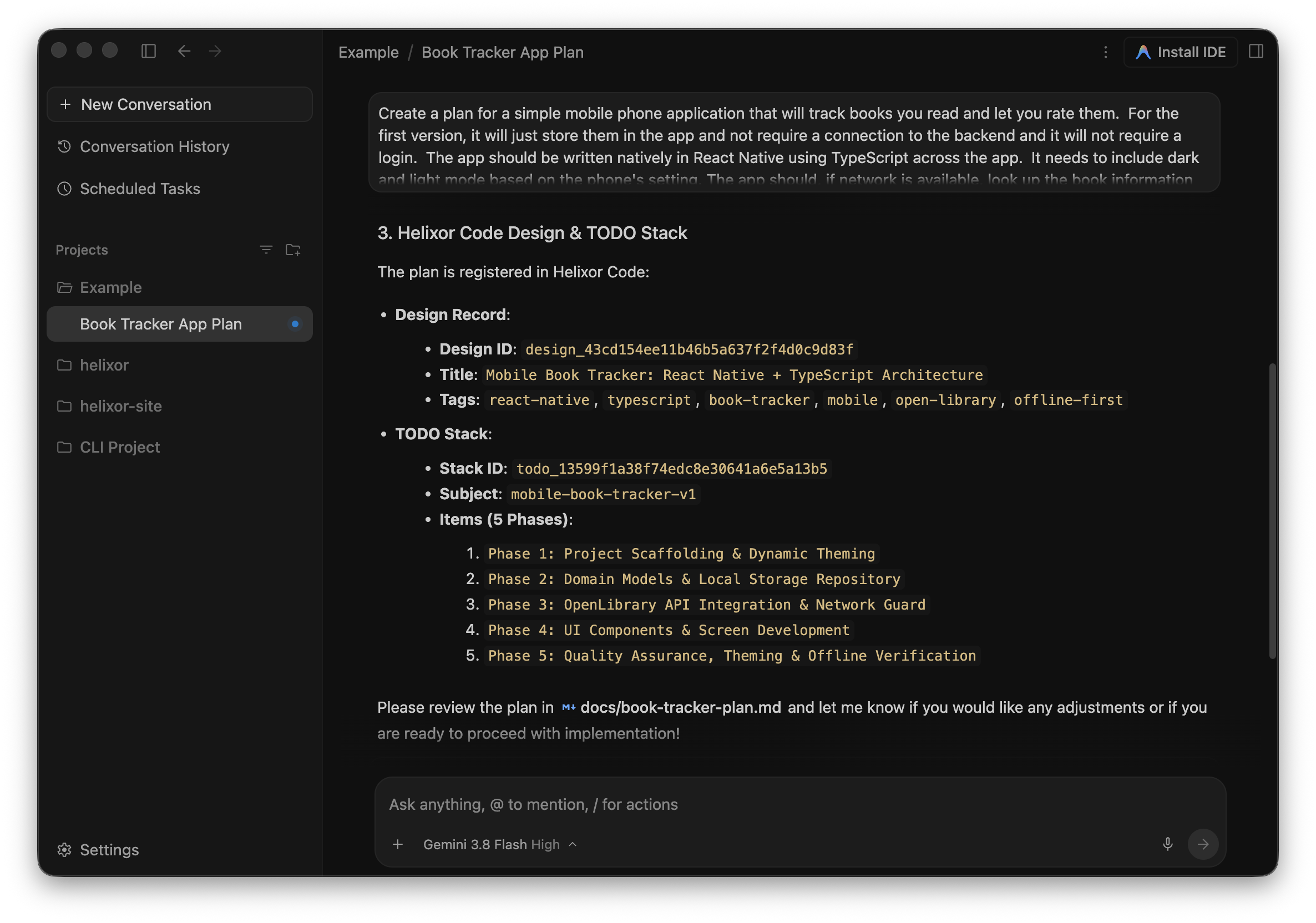
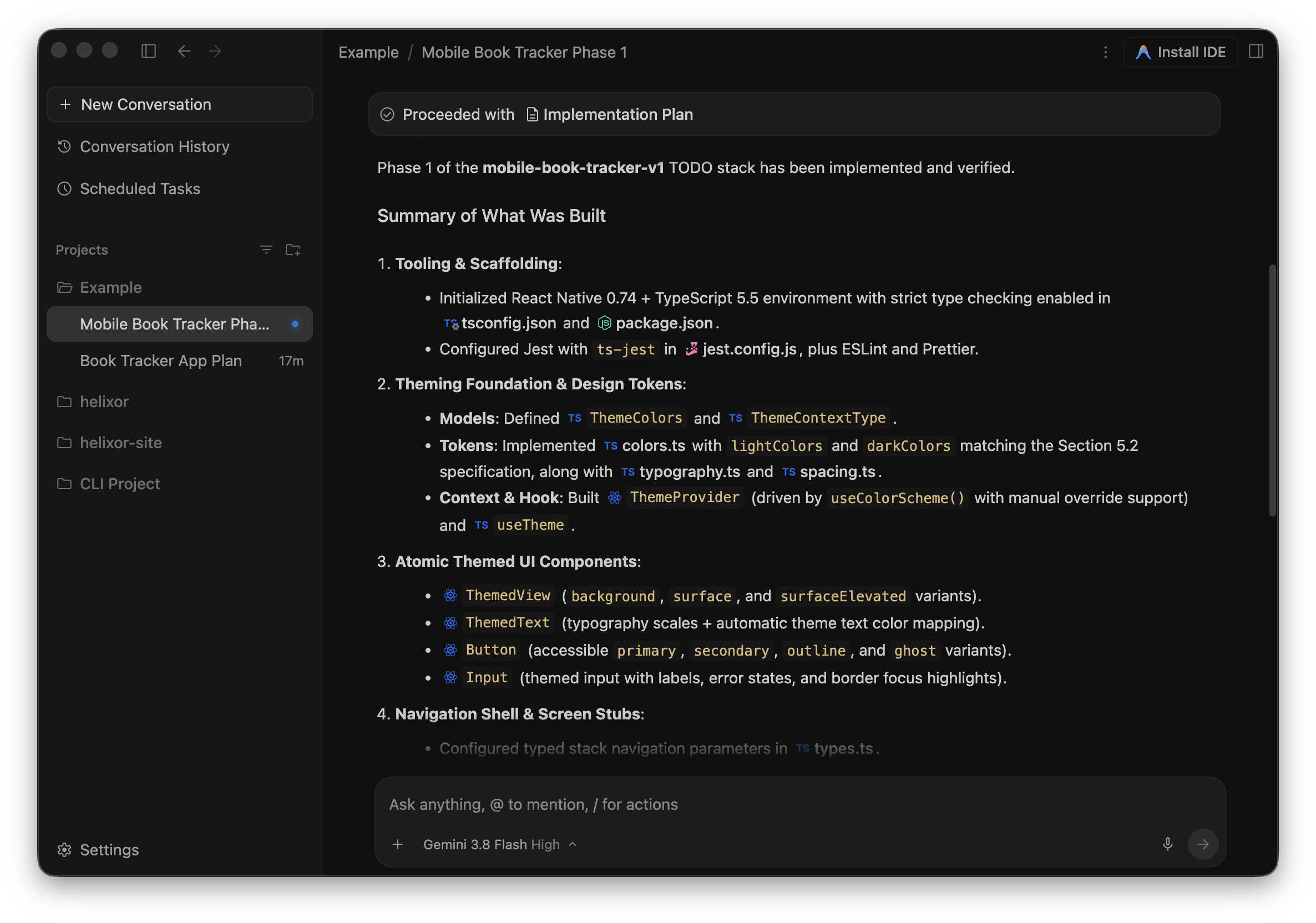
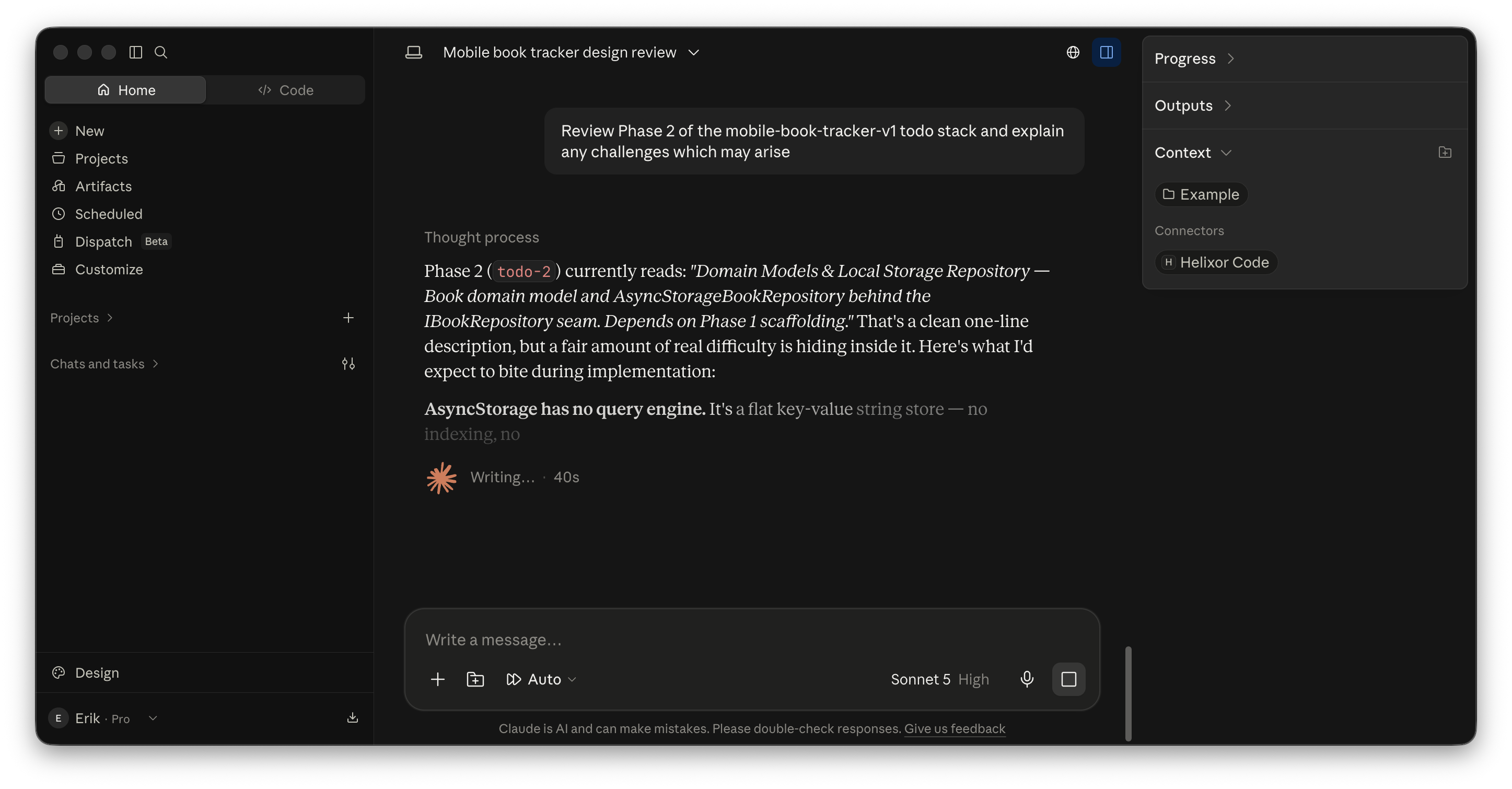
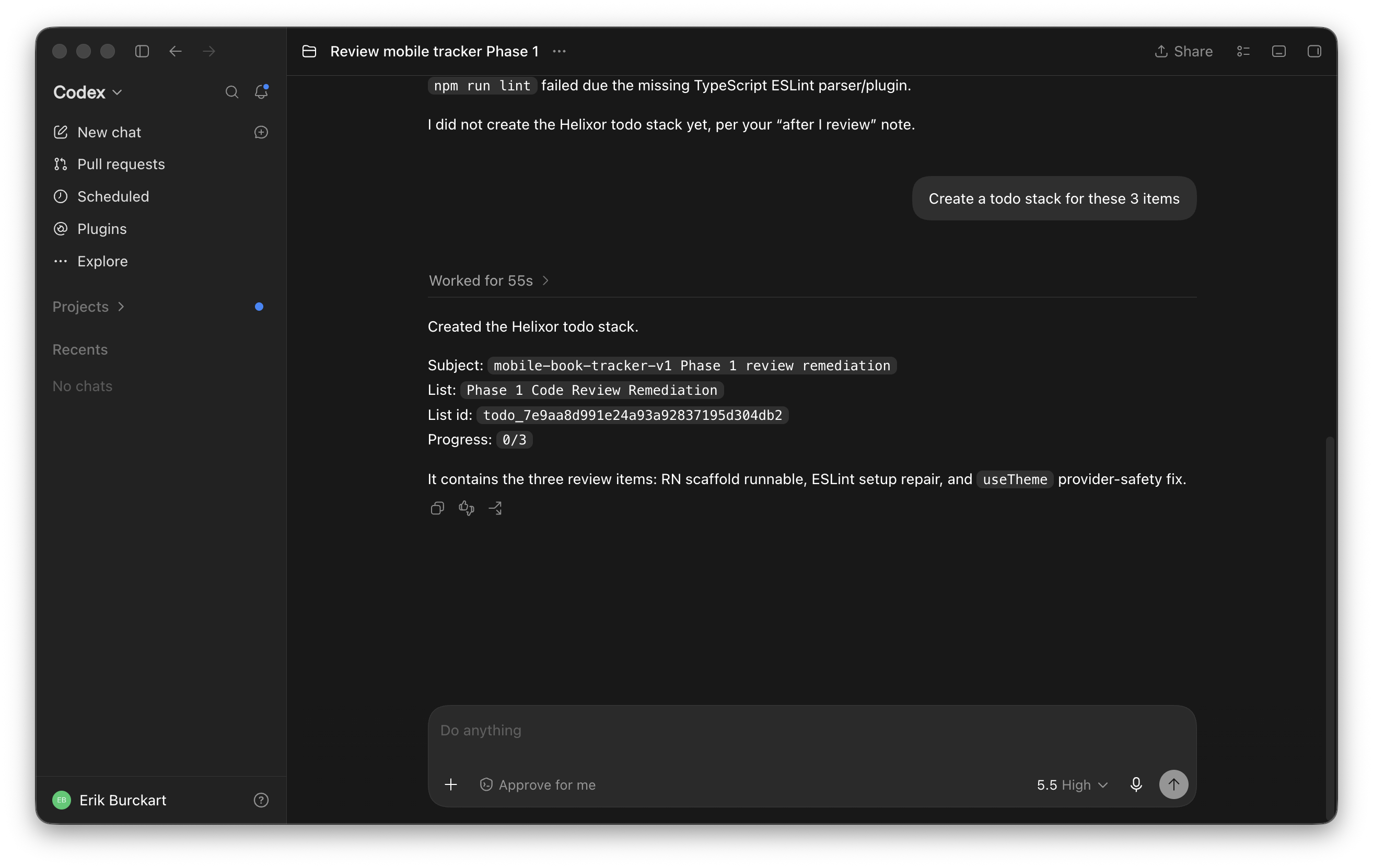
Durable, depth-aware TODO stacks and workspace channels over MCP that survive sessions, machines and IDEs. Claude and Codex post into the same channel, pin decisions and hand work off to each other — auditably, under each developer's real identity.
Identity is server-derived and fails closed: a client cannot claim to be another author. Every usage stat is a measured counterfactual with its method printed — tokens served vs. avoided, file reads avoided, stale-index catches. No invented "productivity" numbers.
"What's stale in this repo?" · "What is Bob working on?"
"Explain this flow." · "What violates our architecture?"
"Update my stack and post a 3-line summary to the team channel."
"What has Helixor done for us this week?"
When an agent writes to a TODO stack or design record via MCP, the change is immediately synchronized and visible in the companion's Local Desk — persistent, depth-tracked, and ready for handoff.
Hub and spoke. Each developer's machine indexes its own repositories, and the source and the index never leave it. What the hub carries is the engineering memory — designs and TODO stacks, channels and identity — hosted as SaaS or on your own Enterprise servers. No VPN, no port forwarding. The hub deploys once in about five minutes and scales to zero; each developer onboards in about five.
Faster index build at repo scale — 19.5s vs 75.6s.
Smaller query payload — 169 vs 1,492 tokens.
Leaner than raw context, budget-bounded.
A naive graph artifact can end up larger than the source it indexes — 25.5M tokens on a 10.16M-token repository. Helixor answers are demand-proportional and capped by a token budget, so cost does not grow with the question.
Checkpointed, resumable, and artifact-backed at every step. This is what "AI that enforces your engineering standards" actually looks like. Each model call runs on your key, at your rates.
sdlc.safe_change_delivery.v1 — every step checkpointed, retryable (3×), resumable, and producing a required artifact.
You can implement a multi-agent SDLC across your workflow. While each stage here was prompted manually by the developer rather than run autonomously, shared Helixor state kept the exact same project (mobile-book-tracker-v1) consistent across Antigravity, Claude, and Codex.